The short story, 'The Ones Who Walk Away From Omelas' has a sequel, well not official, since it was written by another writer named Isabel J Kim in 2024 and Ursula K Le Guin died in 2018 and so she couldn't comment anything. But the sequel is not just a typical fan fiction, it has won several awards like the first one and even has its own Wikipedia page.
And there are so many other work inspired by the original story. You can read more about them on Jed Hartman's website.
But today I am only going to talk about these two, the original by Le Guin and the solution proposed by J Kim.
Is it going interesting?
If you have read the original, then I assume you too were rooting for walking away, because that's the moral thing. I assume you think you would walk away too from Omelas.
But I don't think, and I know this isn't a new interpretation of the story, that the central theme was these decisions, these questions. Questions such as, "Omelas is immoral, don't you think?" "Walking away is the right thing to do, isn't it"?
But first, do you know iPhone 18 is releasing? Or some cool laptop, or a new GPU architecture now with more number of cores, or an AI model that can solve Navier Stokes level math problems, or some EV cars that's even nicer and has better speakers than what was released 2 months ago?
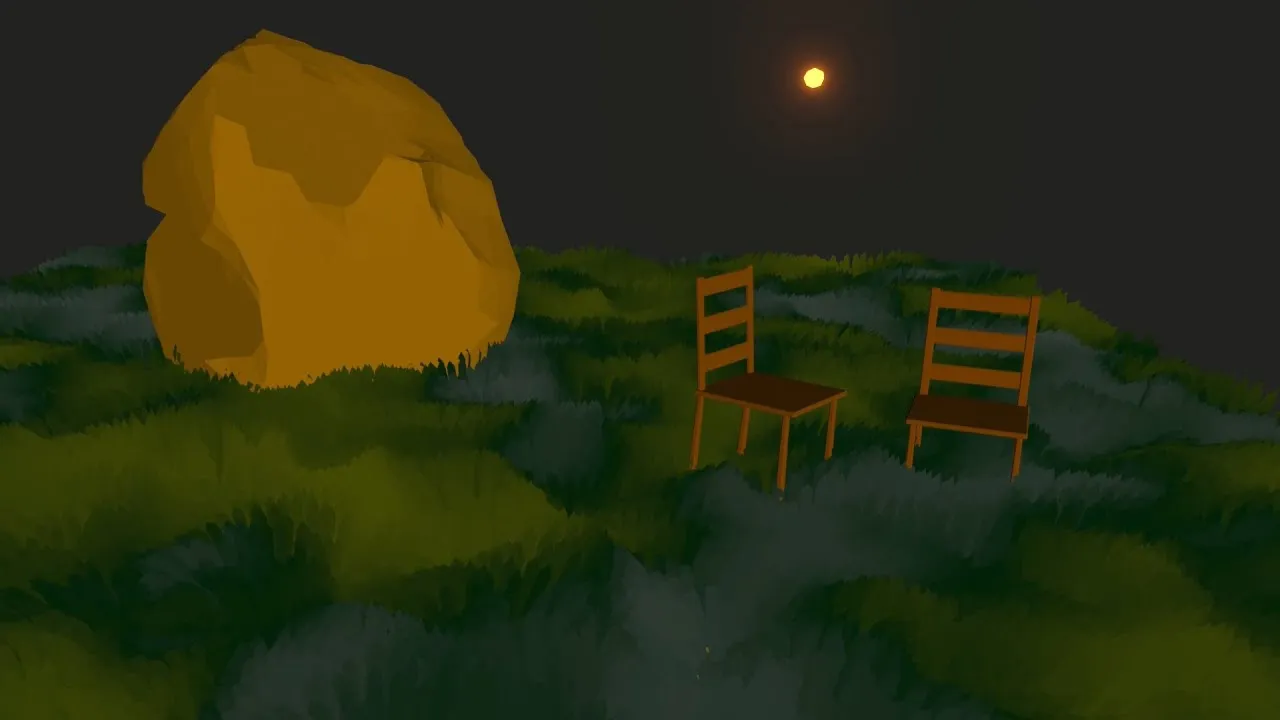
Omelas is a fictional city, a utopia of some sense. But you have to imagine the contents of Omelas yourself, as the narrator of the story says. You can add whatever to Omelas like iPhones and lipsticks and gaming laptops and gold chain, etcetera. All the things that are signs of a happy city, filled with happy people. You have to convince yourself that it exists.
And there is no guilt in Omelas, and all are proud and merry. And they all gather for the summer festival, where everyone is happy. Some are singing, some are dancing, some are cooking, children playing and giggling and all are clean and nicely dressed. Do you think the festival is convincing? How can there be such a festival? Do you accept it?
No, you do not accept it.
Then there's one more thing.
In a basement of one public building, there is a small room, so small a child cannot even take 5 steps around. It is dark, dirty, and cold. In this room, a child is sitting, hunched in the corner and it is of about 10 in age. It is very thin and diseased, and it sits on its own excrement. It knows nobody will come to rescue him, and so these days it is exhausted and can't even cry and no longer make words of request. It doesn't understand how much time has passed. Sometimes some people come and kick the child to make it stand while sometimes people just look at him in disgust.
Is it interesting now? Well keep listening.
All the people of Omelas know it's there. Some even come to see it. But they all know it has to be there, they all understand that their happiness, the beauty of their city, their health, wisdom, education, their ice creams and cold drinks, clear skies, all depend wholly on this child's misery.
Is it going interesting? Listen more.
This is usually explained to Omelians when they are between 8 and 12, and that's why most who come to see the child are young people. And most do not come back to see it of course. And of course the young spectators are always shocked and sickened at the sight. They feel disgust, anger, outrage, despite all the explanation.
Does this sound realistic? I assume Omelas is coming to life finally.
But there is nothing to do. If the child were brought up into the sunlight, if it were cleaned, fed, treated, comforted, at the same hour all the prosperity and beauty and health of Omelas would wither away. It will all be destroyed. Those are the terms. So no one wants that. Who would throw the happiness of thousands for a single child? A single childs misery is a small thing, a negligible thing.
You might cry if you were to see the child, don't you? And so does a few who come to see it. They go home in tears, and in rage. They continue feeling these things for some time, but soon they begin to realize it's a good thing. The child is already destroyed beyond repair. It can't know joy even if it is drenched in it. It has lost the comprehension of differences. So it would feel the equal pain even when released and fed and comforted. And the skies are clear, everyone healthy, and roads clean. So yes this is reality, and it's justified. They accept it. And yet they acknowledge they are generous for thinking it so, they are compassionate to each other because they know this child exists.
I think it's interesting now. You can see yourself in these people who feel sad after knowing about the child. But there's one more thing to tell and this is quite incredible.
Often some people who go to see the child for the first time don't go home weeping or in anger. And there are some old people who fall silent. These people go out into the street and walk down the street alone. They keep walking and walk straight out of the beautiful gates of Omelas city. They go on. They leave Omelas, they walk ahead into the darkness, and they do not come back.
Yes, Omelas can be metaphorically interpreted as our current world under capitalism. How our happiness depends solely on the misery of some children, more so now with Iphones and Cars and Batteries, and other things, compared to 1973, the year the story was published.
Instead the story is an exploration of human psyche, a series of information that are presented in a linear fashion, and with each addition the narrator asks simple questions, "Do you believe it now? Are you entertained? Is it convincing now?"
Omelas doesn't already exist somewhere and the narrator isn't describing it as some observant with birds eye view. But the narrator is, with the reader, creating Omelas out of scratch. You build Omelas as you read the story.
iPhone is red, and so is every tech
Marques Brownlee is probably the most famous tech YouTuber and I watch his videos sometimes. When an iPhone is released what does he, and all the other people talk about? Well, about it's features, how great the camera is, how cool the design, it's even available in the blue color, how powerful the processor is, how innovating the company Apple is, this trillion dollar company... And when some AI model is released, people talk about how profound the responses are, and for an EV, maybe how fast does it charge and how much comforting the seats are.
But who talks about the cobalt mining in Congo, the ongoing genocide fueled by this mining industry, where millions of people, including children are killed, raped, mutilated?
And who talks about the drought and climate change and disaster brought by AI data center and energy machines? Who talks about the global warming, about flood that kills thousands in a blink?
Well boring people talk about these, not interesting people like Marques, of course. Activists, that's the nomenclature. Not normal people, but activists. Anti-technologist, anti-innovation. Boring bunch.
The moment you talk about it, people walk away. They don't want their world crumbled, well, they don't want to know, they don't care. They just want an Iphone. Pro Max model, red in colour. Why should they care? Stops making it political. They don't want you to talk about the system that benefits them so much.
When you talk about clean drinking water for everyone it's less exciting, compared to how an EV can go 200 km with just one time full charge.
Now yes, Omelas can be understood as an allegory of our capitalistic world. But that's not important. Drawing metaphors is not important, you can keep drawing metaphors your whole life, and people will clap at you, praise you for this clever thinking, and that's all. Then the competition will be of who can draw better metaphors, and only metaphors will get attention, but no one will focus on understanding the problem and solving it. Again, distraction, muddling the water. Keeping people occupied.
It's like Apple preaching about children's education, health, and poverty reduction, while just continuing the exploitation. Like that scene from American Psycho.
We talk about what iPhone is, but not why and how that iPhone exists. We talk about how great some AI model is now that it has released 100s of very hard math solution. But now why and how that AI exists.
And this is what common sense is, right, that's what we are sold by these companies, advertisers, these promoters and marketers, our celebrities, our politicians and innovators and scientists. I mean we are told to talk about the number of transistors in some chip, about the sensor size in camera, about watt hours in battery, about technology, but not about the people who pay the real price for it. And I don't mean the consumers.
And what can an average person even do? I might need an iPhone. I could be 20 and this could be my first phone. Or maybe I have been using my old phone for 8 years and now I want something new. An average person has to earn his living, and so he needs to participate in the system at all costs.
And this isn't some anti technology rant. I know MRI machines are important, mobile phones have made the world better, EVs are clean, with AI we can learn complex subjects in an easier way.
What are Omelians to even do? They must understand that it is a necessity. And it's bad but justified, because it's just a single child and they are in thousands.
No, no, no, no...there is no other way, trust me, there isn't. Is there?
Le Guin was anti capitalist. And the story can also be seen as the lies with which capitalism spreads its wings and encapsulates average person's worldview. She is dismantling the tropes which we collectively believe because we are constantly brainwashed by sophisticates and pedants, or in simple words capitalists and their fan boys/fan girls, to believe a happy place cannot exist on its own without some sinister secret, and people can't just be content without exploiting each other and without secretly plotting against each other.
This is self evident as you keep reading the story.
Imagine a city without kings and politicians, without stock market and bombs and guns and swords and police.
You might think such people then are bland and boring without any personality, that they are like cave men. Well you cannot even believe it one bit, can you? Its not enough and you are losing interest. It's not convincing at all.
How can those people be as complex as we are? They must be feeble minded, uneducated, monotoic, barbaric, and simpleton. How can they be happy without feeling jealousy, without any ego, without a will to cheat another? Something dark and sinister must exist. Something must be off. If it's not evil, is it any interesting then? There can't be beauty without pain, can it?
What about their technology? They must not have technology because how can there be technology without stock market and sensualized advertising industry and exploitation of nature and people? But then how could they be happy without technology? But they must have a cure to all diseases, if they all are truly happy. And they must have some transportation, fast, safe, always on time. But this is again fantasy, goody-goody. Some random words strung together and it has no meaning and certainly out of touch with reality. Such a world cannot exist at all, isn't that the truth? Isn't that common sense? Well add your own fantasies then, the narrator promotes, and convince yourself it exists.
Something good, like an iPhone, cannot come without something bad, like children working in mines and factories. How would an iPhone even shine without all that blood? And hence Apple can get away with this. We accept Apple and its wrong doing. How can AI create a picture of a dog and a frog being best friends, without stealing some artist's work as training data? Leave the poor AI alone. We have to accept content theft. It's normal.
And Marques Brownlee is not doing anything wrong. He is making videos to earn his living, he is providing employment to all these people in his studio. The moment he talks about Congo and exploitation, he will be boring, he will lose views, his subscribers will move on to another not-boring tech YouTuber. So it's justified. It's the way of the world.
I am using his name to get views, and he makes videos reviewing tech, helping people make better decisions and earning money. All of us are vultures, and we know it, but hey, that's how the real world is. All is justified. All is exactly what it could be. There is no better scenario than what is right now. This is the most optimal approach, as they say in Computer Science.
The absurdity you must never think about
But why do Omelians, you know all of them, not realize that a single child suffering for their happiness is totally absurd, you know, why all of them not realize that they can remove the child from the hole and still have a happy city because they are all civil, they are all compassionate, they are all helpful.
Why do they not all realize that an apple tree won't just suddenly turn sour and will grow thorns just because that child in the hole is removed? That their water won't just suddenly turn into poison just because the child is released?
Why is it so hard to see that, for all of them? Why do they keep putting the child in the hole? Why do they believe the lies of I don't know, some authority among them, some inner voice, that tells that the child must be there? Why don't they realize the absurdity of their choice, their behavior? Why don't they have a common sense?
So that's why what Omelas is is not important. The structure of Omelas city, it's tradition, it's representation, I don't think they deserve our attention at all. Le Guin didn't write the story because she wants us talking about Omelas, but the "why" questions.
Why can we imagine Omelas, but not this simple logical sense, this common sense, developing among individual Omelian? Why do we accept people walking away, but not this awareness to be integral part of every Omelian? Why do we assume an Omelas like city will even exist? Why will we create Omelas? We all believe we as an individual are kind, smart, immune against lies and stupidity.
And when we find ourselves in Omelas, why won't we change? Why will we keep believing the fiction that the child needs to suffer? That the artist needs to be scraped? Why won't we doubt and question? Why do we keep searching for the sinister secret, and if we don't find one, contribute to creating a brand new exploitation scheme? Why do we keep installing the child by buying iPhones and other things? Why do we accept that an iPhone coming through this deed is normal? Why do we accept Apple? Why do we accept the behaviour of AI companies? Why don't we realize we can collectively stop this?
And why does Marques not realize that he can talk about places like Congo, from where the products he reviews truly come from. Yes he would lose views. But why only cover one side of the same product, ignoring the other side. Yes he won't make profit out of it in monetary unit, but the name of the beautiful reward is, as Ursula K Le Guin has said, not profit, but freedom.
And this is it. You can think of the story as a TikTok or such shorts videos where it keeps on giving, just so that it can amuse you, get your attention, get your credibility. It want to be liked by you so it is building itself on your world view. Like an algorithmic feed, like an echo chamber.
And of course the story isn't doing it because Ursula K Le Guin is some evil person like today's wannabe techboys and billionaires and politicians. She writes such story because she wants people to know what they have been fed is not real. That we live in a clouded world and it is our every right to question it and try to break the wall. You can see these themes in her other works and speeches.
So the story wasn't asking for the solution to this trolley problem, instead it was showing us a mirror. That's why the place the walkers go to is not important, well it might not even exist, as the narrator says, but they sure walk away, because the reader needs some people to walk away. The reader can't imagine another place but they can't imagine their moral self living in the Omelas, now being happy with the information that a single child is suffering for their ice creams and clear skies and Iphones.
It can be left vague. But the sequel imagines the existence of these other places. And not only that, it goes further describing the attempts to solve the moral question surrounding Omelas, although the original wasn't asking for one. How do you save that suffering child? How do you change Omelas? Walking away is not enough, is it?
And so you may think this breaks the spirit of the original story and completely goes in the wrong direction.
The Sequel and its contradiction
But no, the sequel even more highlights the real theme of the Original. It does so in a reductio ad absurdum, or proof by contradiction manner.
For the first time in Omelas the suffering child is killed. No one knows who did this? Well no one can even imagine killing another person, this is Omelas after all. But the child is shot, and a series of bad events befall onto Omelians. A new child is quickly installed into the hole but it's killed again, this time with the throat slitting broadcasted onto public television. "This is the cost of your happiness, " that's the message. This video goes viral in social media and this is when the commenters from these other places beyond Omelas start pointing their fingers at Omelas.
After the fourth child is killed the killer is captured and interrogated and this interrogation is public of course because information is not censored and hidden from general public in Omelas. It's Omelas after all, the utopia. The killer says he is sick of immorality of Omelians, and he just don't want to walk away like all those before him, but he wants to solve the suffering of the child, he wants Omelians to see what is the cost. He wants Omelians to realize that maybe they can suffer a bit themselves and let the child free. So he invites a revolution in Omelas, to keep killing the child again and again, until the whole system collapses and Omelas has to adapt if it wants to survive. It has to get rid of this horrible tradition. Accelerationist, he claims he is.
So even after executing this killer by painless injection because Omelas is a happy place and there are no guns and torture machine and this is the first execution in history, killing of the child in the hole continues. Seems some people of Omelas, who probably would have been thinking of walking away, are touched by the killer's words and decided this is the only way to resist and so the killing goes on. During the absence of the child, disasters keep happening. People die in road accidents, even landslides occur. So people naturally want a new child to be found and installed as soon as the child is killed. But the killing continues. And the story ends in an ambiguous tone like the original, saying now no one knows where the child is put or if she or he even exists. Time to time Omelians suffer and they assume the child has been killed and the new child is being searched.
Hence Omelas is saved. The child is saved. There is no one in the hole. Do you like Omelas now? You see the sequel touched the moral question and it touched it so much the whole thing breaks and only the absurdity remains.
And also by the introduction of other places, the default interpretation of the original story completely breaks down. Like accelerationism, the believe to make the system go on so fast so that it collapses, the sequel collapsed the veil of the original story by going faster.
You see there are in this Universe, places like our world. And they hear of what's going on in Omelas and how immoral Omelians are that they have installed a child to suffer and all of them live a prosper life. How evil of them, the people from external places comment. They are all over social medias. But these external places are hypocrite. They have not just one child suffering but many, thousands and millions. They have racism, genocide, indifference, bootlickers, celebrities, and not everyone is educated, not everyone is healthy or capable of getting any healthcare. These with children exploitation, children shooting, abusing, pedophilia worshippers and promoters... How dare they comment on Omelas situation, the Omelas where only a single child suffers, exactly one. It's an easy gamble. How can these outsiders even comment and preach about morality, how dare they, these hypocrites.
And how stupid of us, how pathetic of us, to read the story by Guin and point our fingers at Omelians as if we are some high moral being, when we are so silent on what's going on in our own world.
The very act of questioning and drawing metaphors like yeah this is like our world where the rich country and rich people, well average people with a phone and a laptop, get their electronics out of exploitation in places like Congo. This is all absurd. There is no metaphor to make. It is not required because it's the truth. This is all a distraction from what's the real problem, you see this is muddling the water, so that we keep drawing false conclusions and fight each other, instead of even getting vaguely suspicious why we are doing this.
You don't have to solve the Omelas, this trolley problem, because there is no one tied in the platform and no train is coming. It was all a distraction, amusement invented by train companies. And you have been brainwashed to think there's a trolley problem.
Sometimes you are so curious that you keep asking questions unwavering new layers, and then as you know more and more, the real magic goes away, then the thing turns out to be a simple thing but dressed in these elaborate clothing to fool you, to keep you occupied.